ANNA DOES NOT LOOK like someone who wants to become a slave. This is not a compliment. It is simply what you notice first. She is 31, with dark hair that has been recently cut and nails that have been recently done.
We are in a café near her office. It is raining. She has agreed to talk on the condition that I use only her first name.
“I was devastated,” she says, when I ask about her first application.
She means The Slave Bureau, at 31 Oak Street. She applied late last year, after a friend mentioned the name in passing. The Bureau does not advertise. It does not need to.
The interview was straightforward. A woman asked about her finances, her relationships, her health, her employment history, and what she expected from indenture.
“She was perfectly nice,” Anna says. “That was the strange part.”
The meeting lasted an hour. At the end, the woman told her the Bureau would not be progressing her application. Anna was 31. For the placements the Bureau specialized in, her age worked against her.
“I said, ‘I’m thirty-one, not seventy.’” The woman smiled. “I got outside and cried.”

In two weeks, barring a last-minute change of heart, Anna will enter the Meridian Agency to begin the process that is expected to end with her being sold into a five-year indenture contract. She will surrender control of virtually every ordinary aspect of her life for the duration of that contract. She knows this. So does her mother. They are currently not speaking.
And yet the part of Anna’s story that fascinates her most is not the contract waiting ahead of her. It’s the fact that one agency didn’t think she was good enough for it.
“Have you ever had someone tell you exactly what you’re worth?”
For several weeks Anna did nothing. Then an advertisement for Meridian appeared on her phone.
Meridian is the largest voluntary indenture agency in the country. Its ads appear on buses, subway platforms and social media. It runs information sessions. Its website includes photographs, testimonials, and a button marked APPLY FOR ASSESSMENT. She pressed it.
The first difference was scale. At the Bureau, Anna had been Anna. At Meridian, she became one of twenty women arriving for the same assessment session. “That was when it became real,” she says.
She had expected forms, interviews, a medical appointment. She got that, but she also found competition. The women were given numbers on thin chains. Anna was number fourteen. Nobody told them how many would still be there at the end of the day.
“You start looking around,” she says. “Who’s younger. Who’s prettier. Who looks nervous. Who looks fit.” She pauses. “Who might be worth more.”

THE FIRST CUTS came after paperwork and individual interviews. A few numbers were called. Those women collected their belongings and left. No announcement. No explanation.
“That’s when everybody stopped chatting.”
There were posture assessments. A young woman wearing a collar demonstrated positions the candidates needed to hold. An instructor walked around correcting them. The third time he needed to correct someone, she was walked out.
There were medical assessments. There were discussions about sex, obedience and personal boundaries. There were moments Anna will not describe in detail. “Because my dad might read this,” she says.
Was it humiliating? “Yes.” She does not hesitate. “Absolutely.”
What made it humiliating, she says, was not cruelty. The staff were professional. Nobody shouted. It was being assessed in ways ordinary adult life generally allows us to pretend we are not assessed.
Her body mattered. Her age mattered. Her appearance mattered. Her health mattered. Her personality mattered. Her sexual limits mattered. Her capacity to follow instructions mattered.
“At a job interview they’re not allowed to look you up and down and decide whether your thighs affect your value,” Anna says. She stirs her tea. “Here that’s more or less what you’ve asked them to do.”
By late afternoon, six women remained. Anna can still remember their numbers. Three. Seven. Nine. Fourteen. Seventeen. Nineteen.
At this stage, something shifted. Anna began wanting to be chosen. Not merely wanting the financial offer. Wanting to win.
“I can understand the appeal of having the question removed for a while.”
“You spend the morning thinking, What am I doing here? Then they send somebody home and you think, Thank God it wasn’t me. And by four o’clock you’re sitting straighter when somebody walks into the room.”
Had she forgotten what she was competing for? “No. That’s what frightened me.”
The final interviews were individual. When Anna was called, she was told Meridian was prepared to make her a conditional offer based on the results of her medical.
She does not tell me the figure. Was it more than she expected? “Yes.” A lot more? She looks at me. “Yes.”
What did that feel like? For several seconds she does not answer. “Have you ever had someone tell you exactly what you’re worth?” Not in dollars. “Neither had I.”
And did she like the number? “Yes.” She gives a small, embarrassed smile. “I really, really did.”
THERE IS AN OBVIOUS question, and Anna has heard it from almost everybody she has told. Why?
Her finances are difficult but not catastrophic. She has credit-card debt, a personal loan, a salary that has not kept pace with her rent. She is not facing homelessness. Nobody is forcing her. She has a job. She has friends. She has options. “I know,” she says.
So why surrender five years of her life? The financial answer is easy. There is also the appeal of starting again afterward without debt and with enough money to make choices she currently cannot make. But there is another answer she gives more reluctantly.
“I think I’m tired.” Of what? “Being responsible for absolutely everything.”
She qualifies this immediately. “I know how that sounds. I’m a grown woman. Of course I’m responsible for myself. I’m not saying women secretly want somebody to make all their decisions.” She laughs. “What I’m saying is that I can understand the appeal of having the question removed for a while.”
Which question? “What do you want?” She looks out of the café window. “Every day. What do you want to eat? Where do you want to live? What do you want your career to be? Who do you want to date? Are you succeeding enough? Are you earning enough? Are you using your potential? Are you happy?”
And slavery is the solution? “No.” She looks sharply back at me. “That’s much too neat.” Then why do it? “Because I’m allowed to.”
This is perhaps the uncomfortable thing about women like Anna. It would be easier if they looked desperate. It would be easier if they were naïve. It would be easier if voluntary indenture belonged to a category of woman the rest of us could confidently agree we were not.
But Anna looks like somebody you might work with. She complains about her landlord. She has three different group chats muting themselves on her phone. She is irritated that the café has changed its oat milk. She signed petitions against the Voluntary Indenture Act.
Then why do it? “Because I’m allowed to.”
And she is frightened.
When I ask what frightens her most, she looks down at her hands. “The first morning.” What about it? “All of it.”
She knows where she has to report. She knows what she has agreed to. She has read the contract repeatedly. There are still things she cannot quite imagine.
“There’s knowing something,” she says, “and then there’s somebody closing the door.”
She has not crossed that door yet. Perhaps she won’t. Until the contract becomes irrevocable, there remain opportunities to leave the process, and Anna tells me—several times—that she knows this. Does she think she will? “No.” That answer comes faster than any other she has given me.
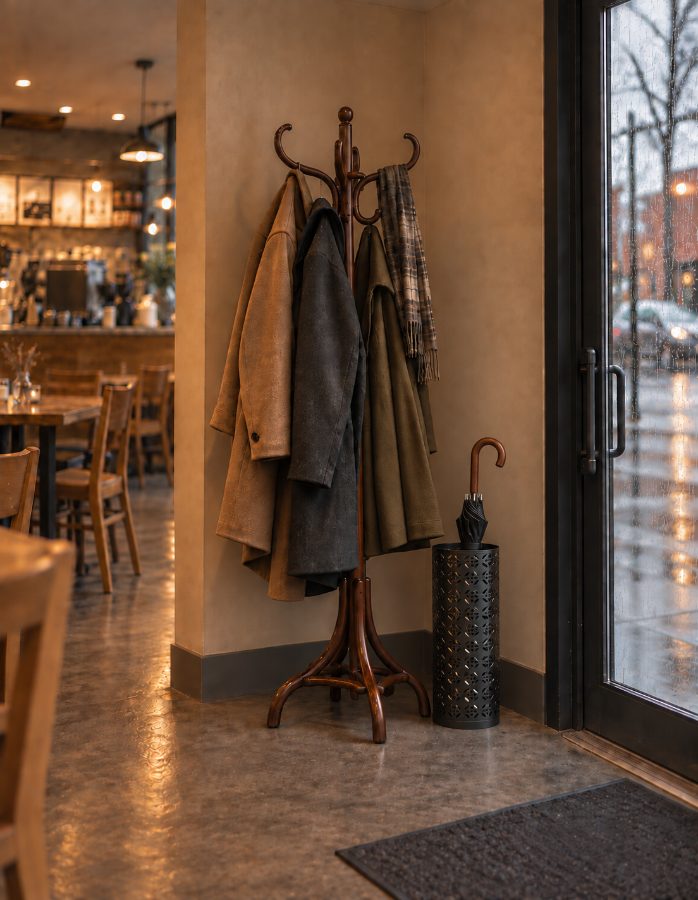
Outside, it has stopped raining. Anna puts on her coat and checks the time. She has a meeting in forty minutes. A normal meeting, at the normal job she will continue doing for another week. Then she gathers her bag and leaves. For now she is simply a 31-year-old woman walking back to work.
ONE LAST QUESTION. If the Bureau called tomorrow and said they had changed their mind, would she go there instead? Anna stops. For the first time all afternoon, she does not laugh.
“Yes.”
Then she walks out.
Allison Grant is a staff writer at September Magazine.